Loading...
First Round of Abstract Submission Ends: Nov 30, 2026
Extended Early Bird Ends: Apr 28, 2026

Plenary Speakers

Prof. Martin Olazar
University of the Basque Country UPV/EHU, Spain
Title: To be confirmed.
Degree and Master’s Degree in Chemical Engineering from the University of the Basque Country (UPV/EHU) in 1978, and PhD in Chemical Engineering from the same university in 1985, with excellence prize in both the Master’s and the PhD. First prize in the “XI Resurrección María de Azkue Research Competition” and “CAF/Elhuyar” (2011). Professor of Chemical Engineering at UPV/EHU since 1994.

The research activities focus on the development of thermal and catalytic processes of interest from an energy and environmental perspective, within the framework of a bio-refinery and waste refinery. He has participated in more than 100 competitive projects (60 as principal investigator). More than 490 papers published in journals indexed in the JCR list, with an h index of 95, and more than 27,000 citations (January 2026). Supervisor of 37 PhD students. Holder of four Spanish and nine international licensed patents.

Spanish Delegate at two workshops within the European Federation of Chemical Engineering (Chemical Engineering in the Applications of Catalysis, 1991-2003, and Chemical Reaction Engineering, 2003-2006); Member of the Research Committee at UPV/EHU (2006-2013). Secretary of the Committee for Experimental Sciences at the Basque Agency for Assessing Research Quality (UNIBASQ) (2012-2016). Head of the Department of Chemical Engineering.
Prof. Nigel Brandon
Imperial College London, UK
Title: Innovations in Electrochemical technology for the low carbon energy transition
Professor Nigel Brandon OBE FREng FRS is Dean of the Faculty of Engineering and Professor of Sustainable Development in Energy. His research is focussed on the science and engineering of electrochemical devices for the low carbon energy transition, with a particular focus on fuel cells, electrolysers and flow batteries. He is a founder of Ceres Power, a FTSE listed fuel cell and electrolyser company spun out from Imperial College in 2000, RFC Power, a flow battery company spun out from Imperial College in 2018, and M-SPIN, a company developing & manufacturing low cost high surface area materials for catalysis/electro-catalysis and thermal management, in 2024. Measures of esteem include: Castner Medal, Society of Chemical Industry (2024); Christian Friedrich Schönbein Gold Medal of Honour (2024); Horizon Prize , Royal Society of Chemistry (2023); Francis Bacon Medal, American Society of Mechanical Engineers (2014); Baker Medal, Institute of Civil Engineering (2011); Royal Academy of Engineering Silver Medal (2007). Professor Brandon received an OBE in 2011 for services to UK-China science and is a fellow of the following institutions: the Royal Society (2021); Royal Academy of Engineering (2008); City and Guilds of London Institute (2008); Institute of Materials, Minerals and Mining (2006); Energy Institute (2006). He was recognised as an International Member of the US National Academy of Engineering in 2022.
Prof. Thomas Wirth
Cardiff University, UK
Title: Advances in Hypervalent Halogen Chemistry
Thomas Wirth is professor of organic chemistry at Cardiff University. After studying chemistry in Bonn, he obtained his PhD and at the Technical University of Berlin. After a postdoctoral stay at Kyoto University, he started his independent research at the University of Basel in 1994, before taking up his current position at Cardiff University in 2000. He was invited as a visiting professor to several places. Thomas Wirth was awarded the Werner-Prize from the New Swiss Chemical Society (2000), the Wolfson Research Merit Award from the Royal Society and the Bader Award from the Royal Society of Chemistry (2016). In 2016 he was elected as a fellow of The Learned Society of Wales. His main interests of research concern stereoselective electrophilic reactions, oxidative transformations with hypervalent iodine reagents including mechanistic investigations and electrochemical synthesis performed in microreactors.
Prof. Jacob Klein
Weizmann Institute of Science, Israel
Title: Hydration lubrication: from basics to the clinic
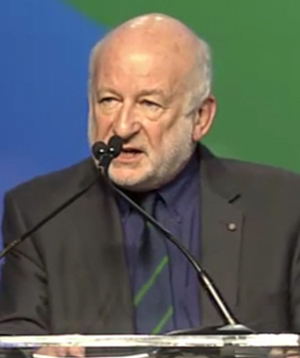
Jacob Klein is the Herman Mark Professor of Soft Matter Physics at the Weizmann Institute in Israel. From 2000-2007 he was the Dr. Lee’s Professor of Chemistry at the University of Oxford and Head of its Physical and Theoretical Chemistry Department (2000-2005). His research interests have ranged from the dynamics and interfacial properties of polymers to the behaviour of confined fluids and biological lubrication. His honours include the High Polymer Physics Prize of the American Physical Society (1995), the 2011 Soft Matter and Biophysical Chemistry Award of the UK Royal Society of Chemistry, the 2012 Tribology Gold Medal, the 2015 David Turnbull Lectureship Award of the Materials Research Society, the 2017 Liquid Matter Prize of the European Physical Society, the 2019 Gold Medal of the Israel Chemical Society, the 2020 Rothschild Prize, the 2021 Irving Langmuir Award in Chemical Physics of the American Physical Society and the Overbeek Gold Medal of the European Colloid and Interface Society. In 2009 and 2017, he received ERC Advanced Grants. In 2013 he was elected to the European Academy and in 2016 he was elected to the Israel Academy of Science and Humanities.
Prof. Jeffrey Chi-Sheng Wu
National Taiwan University, Taiwan
Title: Salar H2 from Photocatalytic Water Splitting by SrTiO3-based Catalysts
Jeffrey Chi-Sheng Wu is a distinguished professor and former chairman of the Chemical Engineering Department at National Taiwan University. He received his PhD. degree in Chemical Engineering from the University of Pittsburgh, USA. Professor Jeffrey C.S. Wu has long-term research activity in solar energy conversion. His research interests include (a) photoreduction of CO2 to fuel, (b) photocatalytic water splitting for H2, and (c) photocatalytic oxidation of air pollutants. (d) Catalytic hydrogenation of CO2. He is a fellow of the Taiwan Institute of Chemical Engineers since 2022. Prof. Wu received many awards including, the FutureTech Award of the National Science and Technology Council, Taiwan in 2024 and 2025; the Qin-Lang Chair Professor of NTU Engineering College in 2022, Outstanding Paper of Taiwan Catalysis Society in 2020, Yang Bing Yan Chair Professor of NTU Engineering College in 2018, Outstanding Engineering Professors Award of the Chinese Institute of Engineers Taiwan in 2016; Outstanding Cross-Sector Collaboration Award of 2nd National Industrial Innovation in 2012; "Lai Tzai-Der award" of Taiwan Institute of Chemical Engineers in 2009, "Chemical Technology Award" of Taiwan Institute of Chemical Engineers in 2006, and "Silver medal of National Invention," Taiwan in 2004. He also serves as a member of the editorial boards in several SCI journals. He is the author and co-author of over 160 SCI journal papers. His h-index is 57 (Jan. 2026) with a total of citations > 11000.
Prof. Janusz Lipkowski
Warsaw University of Technology, Poland
Title: Bertholide compounds - modern category of versatile materials
Janusz Lipkowski graduated at Warsaw University, Faculty of Chemistry (1965), got PhD in 1972 at the Institute of Physical Chemistry, Polish Academy of Sciences. In 1978 he has been appointed the position of Head of Department (original name: ‘Physical Methods of Analysis’, by JL transformed to ‘Physicochemistry of Supramolecular Complexes’). In 1983 he was awarded the degree of DSc (habilitation) and in 1990 became titular professor. He has visited foreign scientific centers, a postdoctoral stay in Parma (Italy) and sabbatical in Tokyo (Japan). Among awards and honors are: the Honorary Professorship of Siberian Branch of Russian Academy of Sciences (and a doctor hc of the Institute of Inorganic Chemistry in Novosibirsk) and the foreign member of the Academy of Sciences in Moldova. In Poland he was appointed a series of important positions: director of the Institute of Physical Chemistry (of PASci) from 1992 to 2003, vice-President of Polish Academy of Sciences (2003-2006). Recently retitred as the profess or of Cardinal Stefan Wyszynski University in Warsaaw (the 2nd State University in Warsaw). Janusz Lipkowski is full member of Polish Academy of Sciences, member of Academia Europea, fellow of Royal Society of Chemistry and member of societies. From 2007 to 2020 he served as the President of Warsaw Learned Society.

Janusz Lipkowski is author or co-author of over 400 scientific publications, mostly on clathrate inclusion compounds, supramolecular complexes and their practical uses.
Prof. Yang Tian
East China Normal University, China
Title: Spatiotemporal Resolved Imaging and Regulation of Living Brains
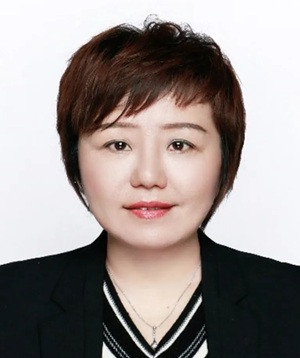
Yang Tian, Distinguished Professor of East China Normal University, is currently the Dean of School of Chemical and Molecular Engineering of East China Normal University. She was awarded the National Outstanding Youth Fund, "The distinguished lectureship award" by the Japan Chemical Society, the First Prize of the Chinese Society for Analytical Testing (first author), the First Prize of the Chinese Chemical Society for Women Analytical Chemists, and the First Prize of the Shanghai Natural Science Award (first author). She has been invited to give 36 international and domestic congress, keynote or invited presentations in neurology and neuroscience. Currently, she is the Associate Editor of Chemical Communications and the Associate Editor of Journal of Advanced Chemistry. Prof. Tian Yang's team has been engaged in the field of chemical expression analysis of in vivo electrical signals for a long time, and has carried out in-depth and systematic work in the development of precise analysis and measurement strategies for biochemical molecules (such as enzymes and proteins), the establishment of long time stable and high spatial resolution imaging methods, and the development of new instruments for high-speed imaging analysis. She has published 146 papers as the corresponding author, including Acc. Chem. Res., Angew. Chem. Int. Ed., J. Am. Chem. Soc., Sci. Adv., Nat. Commun. All papers have been cited 15000 times and selected as Elsevier China Highly Cited Scholar in 2019; 8 Chinese invention patents have been granted; invited to write chapters for a series of neurochemical analysis tools in English series.
Prof. Masami Okamoto
Toyota Technological Institute, Japan
Title: Natural rubber latex-based tissue engineering: The pioneering advances in material for sustainability
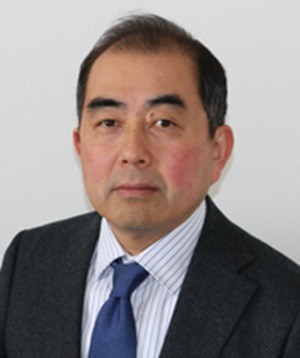
Professor Okamoto received a Ph.D. in 1994 from Tokyo Institute of Technology. He is recipient of the "Thomson Scientific Research Front Award" (current Clarivate Frontier Research Award) in 2004 for Biopolymer-based Nanocomposites. He has received "Advanced Materials Research & Innovation Award" in 2025 for notable and outstanding research contribution in the field of Advanced Materials Sci & Tech from International Association of Advanced Materials (IAAM), Sweden. He has been admitted as a Lifetime-Fellow of International Association of Advanced Materials (FIAAM), August 2025. He is an editor-in-chief of e-J Soft Materials and Vice-president of the Society of Rubber Science and Technology, Japan.

He is the visiting professor, Politecnico di Torino, Italy from 2011-2014, and Wrocław University of Technology, Republic of Poland from 2018-2019.

His research covers aspects of nano-structured materials, tissue-based bio-composites, and cancer cell biology, publishing over 200 scientific publications with more than 29,800 citations, registered numerous patents and a number of books (h-index: 60 Google Scholar, 2025, D-index: 54 Research.com, ONE-index 800/1000 ONE Research Community).

Most recently, he was recognized by ScholarGPS as a Highly Ranked Scholars™ for his outstanding professional performance, the high impact of his work, and the outstanding quality of his scholarly contributions. He ranks in the top 0.002% of all academics worldwide. In the field of nanocomposite, out of 215,380 Researchers, he is ranked 2nd in impact, 10th in quality, and 6th in Scholars Rank.