Loading...
First Round of Abstract Submission Ends: Nov 30, 2026
Extended Early Bird Ends: Apr 28, 2026

Keynote Speakers

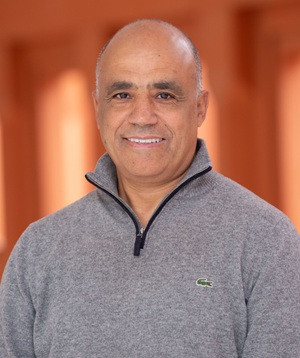
Prof. Jamal Chaouki
Polytechnique, Montréal, Canada
Title: Process Electrification: A Key Decarbonization Technology
Prof. Chaouki is full professor from 1995 at Polytechnique, Montréal. He is affiliated professor at UM6P. He published more than 500 articles in refereed journals and more than 320 in different reviewed proceedings and more than 450 other scientific articles and edited 34 books. He has 55 patents on different processes. He is member of the Canadian Academy of Engineering. He received the R.S. Jane Memorial Award in 2018 for an exceptional achievement to the field of chemical engineering and the “Excellence in Research and Innovation Awards” at Polytechnique. He also received the SCI Kalev Pugi Award and Honoris Genius 2021 Innovation from OIQ and the J.R. Grace Award in 2024. He is world-renowned consultant for at least 20 national and international companies. He is internationally recognized for his skills in process development and scale-up. He has created 5 start-ups with his students (the last are Pyrowave, NeoCTech and PyroCycle). His work is mainly dedicaded to develop processes from waste, biomass and complex feedstocks to heat & power, fuels and chemicals.
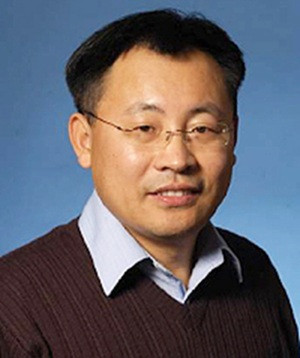
Prof. Rongjun Chen
Imperial College London, UK
Title: Biomimetic Approaches to Targeted Delivery and Enhanced Stability of Biomacromolecules
Rongjun Chen obtained his PhD degree and undertook his postdoctoral research in the Department of Chemical Engineering and Biotechnology at the University of Cambridge. He is Currently Professor of Biomaterials Engineering and Head of the Biomaterials and Nanomedicine Laboratory in the Department of Chemical Engineering at Imperial College London. His research focuses on the design, synthesis, and manufacturing of polymers, lipids and bio-inspired nanoparticles for the targeted delivery of active pharmaceutical agents. He has established a translational research programme in targeted nanomedicine, room-temperature-stable RNA vaccine formulations, cell and gene therapies. His work has been published in leading journals, including Nature, Nature Chemistry, Science Advances, Advanced Materials, Biomaterials, and Journal of Controlled Release. His research has been recognised by various awards, including the IChemE Global Team Award (2021), the Imperial College President’s Award for Outstanding Research Team (2021), and a Highly Commended distinction for the IChemE Global Biotechnology Award (2018). He serves as an Editor for Chemical Engineering Journal and is a member of Editorial Board of Discover Molecules and Nano Trends.
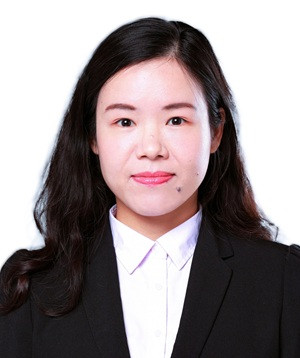
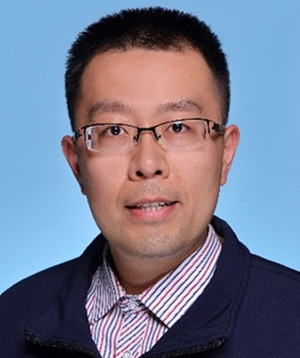
Dr. Tian Li
Tongji University, China
Title: Fabrication of Two-Dimensional Lamellar Membrane and Its Application for Industrial Wastewater Treatment
Dr Tian Li is currently an associate professor at College of Environmental Science and Engineering, Tongji University, Shanghai China. She is the early career editorial board member of Chemical Engineering Journal, Chinese Journal of Environmental Engineering, and Chinese journal of Water Purification Technology. She is the member of the International Water Association - Young Water Professional (IWA-YWP), and also the member of the Seawater Desalination and Water Reuse Branch of the Chinese Society of Oceanography. She has published more than 70 journal papers, 3 book chapters, and been granted 5 patents. Her research interests are membrane separation science and technology in water and wastewater treatment.
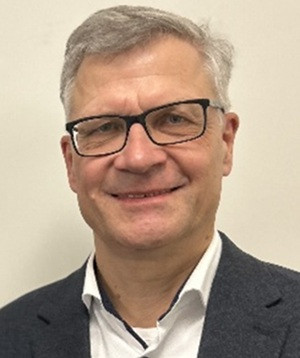
Prof. Hrvoje Kušić
University of Zagreb, Croatia
Title: Tailored solar-active photocatalysts for environmental applications
Prof. Hrvoje Kušić is born in Zagreb, Croatia. He is employed at the University of Zagreb, Faculty of Chemical Engineering and Technology since 2001, currently as Professor, while since 2021 he is also employed at the University North, Koprivnica, Croatia. He received a BSc and PhD diplomas in 2001 and 2006, respectively, from University of Zagreb, Faculty of Chemical Engineering and Technology. He is head of research group on advanced oxidation/reduction technologies and solar-active materials, while his research interests include: (i) advanced water treatments, particularly advanced oxidation/reduction technologies; (ii) nanotechnology, particularly design and development of solar-active materials for water treatment and energy conversion; (iii) process simulation and optimization including mechanistic/phenomenological modeling; (iv) fate and behavior of contaminants of emerging concern using QSA/PR modeling; (v) waste management, particularly thermal treatment technologies; and from recently, (vi) microplastics. Prof. Kušić is recipient of National Annual Science Award for 2011 from Ministry of Science, Education and Sports of the Republic of Croatia, and Fran Bosnjakovic Award from University of Zagreb for 2023, both for his outstanding scientific research performance. He teaches courses on water quality and treatment, and waste management. Besides pedagogic work, he is/was involved in ⁓30 national and international research projects, >10 as a principal investigator. He is (co)author of ⁓130 publications (⁓110 papers in peer-review journals) and holds >4200 citations (h-index 34), and participated at >130 national and international conferences, including numerous plenary and invited lectures. Prof. Kusic is/was editor in several journals, including one of the leading journals in the field of interest: Chemical Engineering Journal.
Prof. John Pickett
Cardiff University, UK
Title: New chemical discovery approaches and biocatalytic synthesis for sustainable control of pests in human health and food production.
John’s contributions to the field of Biological Chemistry have been acknowledged with the 1995 Rank Prize for Nutrition and Crop Husbandry, election to Fellowship of the Royal Society in 1996, election to Membership of the Deutsche Akademie der Naturforscher Leopoldina in 2001 and received the International Society of Chemical Ecology Medal in 2002. John was appointed to the UK civil honour of CBE for Services to Biological Chemistry in 2004. In 2008 he was jointly awarded the Wolf Foundation Prize in Agriculture. He presented the Royal Society’s premier lecture in the biological sciences, the Croonian Prize Lecture in 2008, and the Cornell University Lecture in 2009. He was awarded the International Congress of Entomology Certificate of Distinction at the XXIV International Congress of Entomology held in Korea, August 2012. He was elected International Member of the National Academy of Sciences in 2014 for his role as "an international driving force in the science and application of chemical ecology and in fostering advances in integrated pest management and agricultural sustainability". He became President of the Royal Entomological Society in 2014 and in August 2017 gave the Sterling B Hendricks Memorial Prize Lecture at the 254th Meeting of the American Chemical Society, Washington DC. In 2020, John was elected Fellow of the Learned Society of Wales and Distinguished Laureate Fellow, International Engineering and Technology Institute in 2025.
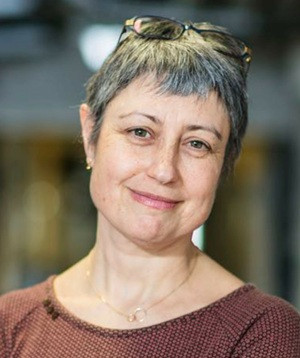
Prof. Paola B. Arimondo
Institut Pasteur, CNRS, France
Title: Allying Chemistry and Biology to tackle the Epigenetics in human diseases
Paola B. Arimondo is a chemist research director at the CNRS, working at the Institut Pasteur in Paris, where she heads the Department of Structural Biology and Chemistry and the CNRS-Pasteur UMR 3523 Chem4Life. Her lab, the Epigenetic Chemical Biology unit, develops interdisciplinary approaches at the interface of Chemistry and Biology focusing on epigenetic regulation and its targeting by small molecules with the aim of reprogramming cancer cells and fighting infections.

Before joining the Pasteur Institute, she led the Epigenetic Targeting of Cancer (ETaC) unit, a public-private joint laboratory between the CNRS and Pierre Fabre Laboratories located in Toulouse, France. In 2016, she was appointed visiting professor at Churchill College in Cambridge, UK, where she developed research at the interface of chemistry, biology, and clinical practice. In 2022, she received the Seqens Prize from the French Academy of Sciences. She is coauthor of 160 publications and 10 patents.
Prof. Peng Gao
Shanghai Advanced Research Institute, CAS, China
Title: Direct Carbon Dioxide Hydrogenation to Chemicals and Fuels via Heterogeneous Catalysis
Prof. Peng Gao received Ph.D. degree in chemical engineering and Technology from University of Chinese Academy of Sciences in 2014. His research interests mainly focus on the conversion of carbon one molecular into chemicals and fuels. He has been published in more than 90 papers in international journals such as Nature Chemistry, Science Advances, and Chem, which have been >7700 times (H index = 44). He joined the Editorial Board of Chinese Journal of Catalysis in 2022 and SCIENCE CHINA Chemistry in 2023. He has obtained and award from the Catalysis Rising Star Award from the Catalysis Society of China in 2021.
Prof. Christoph Schneider
University of Leipzig, Germany
Title: A Novel Umpolung Strategy for Enantioselective Synthesis
Christoph Schneider received his chemical education at the University of Göttingen (Germany) and obtained a Ph.D. degree in early 1992 with Prof. Lutz F. Tietze. Subsequently, he was a postdoctoral fellow with Prof. David A. Evans at Harvard University (USA) before returning to Germany to perform independent studies towards his habilitation in Göttingen from 1994-1998. Thereafter he was invited for visiting professorships in Szeged (Hungary), Toronto (Canada), and Saarbrücken (Germany). In 2003 he moved to his current position as Full Professor at the University of Leipzig (Germany) where he has remained ever since. He has served twice as Dean of his faculty and from 2016-2024 he has been an elected member of the review board for organic molecular chemistry within the DFG. His research interests are in the area of stereoselective organic synthesis with a focus on catalytic enantioselective transformations and their application towards natural product synthesis.
Prof. Mingzhong Li
De Montfort University, UK
Title: Pharmaceutical Cocrystals: Route of Molecules to Patient-Centric Medicine
Professor Mingzhong Li holds a chair of Crystallisation Science and Drug Delivery and group Lead for Pharmaceutical Manufacturing and Technologies in Leicester School of Pharmacy at De Montfort University (DMU). His research interests centre around the fields of crystallisation science and engineering, oral drug formulation design and delivery, and pharmaceutical product manufacturing. He is well acknowledged for his pioneering work of co-crystallisation of active pharmaceutical ingredients (APIs) and for developing patient centric oral medicines for Neglected Tropical Diseases (NTDs). His work has been supported by EPSRC (Engineering and Physical Sciences Research Council), GCRF (Global Challenges Research Fund) and HEIF (Higher Education Innovation Fund) in collaborations with the world leading universities and industries. He is one of the key founding members of the Pharmaceutical Quality by Design (QbD) training centre at DMU, collaborating with experts from international leading pharmaceutical companies and the regulatory bodies. He has experience of working at world leading universities, i.e., the Hong Kong University of Science and Technology, Heriot-Watt University and University of Oxford. This supported him to develop a wide and in-depth research knowledge at the interface between Material Science, Chemistry and Pharmaceutical Engineering, covering computational fluid dynamics (CFD), molecular dynamics (MD) modelling, crystallisation science and pharmaceutical engineering.
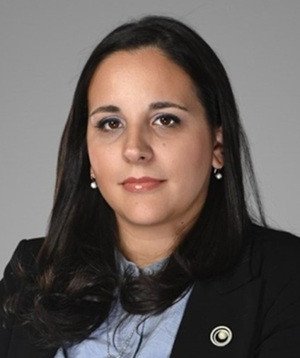
Dr. Mila Krstajic Pajic
University of Belgrade, Serbia
Title: Advanced Electrode Architectures through Scalable Electrodeposition for Sustainable Green Hydrogen Production
Dr. Mila Krstajić Pajić is currently an Assistant professor at University of Belgrade – Faculty of Technology and Metallurgy, where she earned her PhD in 2019. Her research expertise lies in electrochemistry, with a primary focus on electrocatalysis and energy conversion technologies.

Dr. Krstajić Pajić’s work centers on the development of advanced electrode materials for water splitting and fuel cell reactions, contributing to the advancement of sustainable energy solutions. With a strong foundation in catalyst design and a deep understanding of electrochemical reaction mechanisms, she is dedicated to bridging fundamental research and practical application. Her current efforts are directed toward translating innovative electrode concepts into scalable technologies suitable for industrial implementation. Her research in catalyst materials includes: (i) shape controlled nanoparticles for small organic molecule oxidation, (ii) electrodeposition of ultra-thin films of platinum group metals (PGM) as hydrogen/oxygen evolution catalysts (HER/OER), (iii) decoration of anodized TiO2 nanotubular arrays by PGM nanoparticles via galvanic displacement for HER/OER catalysts, (iv) electrodeposition of non-precious metal alloys on complex Nickel structures for zero-gap electrolysis applications.

Dr. Krstajic Pajic is currently involved in a COST Action CA24103 on fundamental electrocatalysis. She managed an R&D project NOVATRODES (Innovative Coated Porous Electrodes for Large-Scale Hydrogen Production) in collaboration with Fraunhofer IFAM Institute in Dresden, Germany, and has authored 20 research papers. At the Faculty of Technology and Metallurgy she teaches courses in Physical Chemistry, Electrochemial Engineering and Electrochemical Reactors.
Prof. Giang VO-THANH
ICMMO, Université Paris-Saclay, France
Title: Bifunctional chiral organocatalysts: design, synthesis and applications in asymmetric organocatalysis
Giang Vo-Thanh received his Master’s degree in 1994 and his PhD in 1997 from the Pierre and Marie Curie University (Paris VI, France). Following a three-year postdoctoral fellowship, he joined the faculty at Paris-Sud University (Orsay) as an Assistant Professor in 2000. After obtaining his Habilitation (HDR) in 2006, he was appointed Full Professor at the same institution (now Paris-Saclay University) in 2007.

His research interests encompass various aspects of synthetic methodology, including the design and synthesis of chiral ionic liquids and their use as chiral reaction media (solvents and/or catalysts) in asymmetric synthesis. His work also focuses on the synthesis of new chiral molecules such as amino alcohols, diamines, phosphines, and various thiourea-based derivatives (thiourea-phosphines, thiourea-NHCs, thiourea guanidines, thiourea-iminophosphoranes) derived from biomass. These are applied as chiral ligands or bifunctional organocatalysts for asymmetric catalysis and the preparation of molecular scaffolds with biological interest.
Prof. Jiang Guibin
Research Center for Eco-Environmental Sciences, CAS, China
Title: To be confirmed.
Professor Jiang Guibin is now a full professor in the State Key Laboratory of Environmental Chemistry and Ecotoxicology, Research Center for Eco-Environmental Sciences, Chinese Academy of Sciences. His research is mainly focused on analytical development, environmental fate, toxicology and health effects of persistent organic pollutants, endocrine disruptors, organometallic compounds, nano-materials and new pollutants. He has contributed more than 1700 papers in peer-reviewed international scientific journals, and 27 monographs. He was elected to the member of Chinese Academy of Sciences in 2009, the fellow of the World Academy of Sciences (TWAS) in 2012,the fellow of the Royal Society of Chemistry (FRSC) in 2014 and the Member of the National Academy of Engineering (NAE, USA) in 2026. He has long served as the associate editor of ES&T (2006-2025) and is also the founding editors of NanoImpact, Eco-Environment and Health, and Environment and Health.
Prof. Jiong Zhou
Northeastern University, China
Title: To be confirmed.
Will update soon.
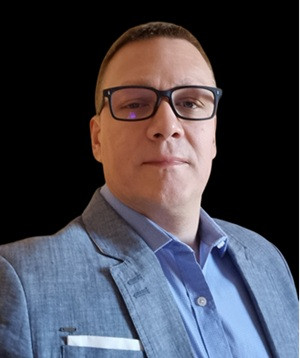
Dr. Sultan Al-Salem
Kuwait Institute for Scientific Research
Title: From Plastic Waste to Medical Applications
Dr. Sultan Al-Salem graduated from Kuwait University (KUniv.), College of Engineering & Petroleum, holding a BSc. (2005) and a MSc. (2007) degrees in Chemical Engineering, where he started his professional career as a teaching assistant (TA, Full-time Graduate Student) and a research engineer. He then joined the Petrochemical Processes Program Element at the Kuwait Institute for Scientific Research (KISR) as a Research Assistant back in August 2006. He earned his PhD. degree from the Department of Chemical Engineering of the prestigious University College London (UCL) in 2013, with a scholarship sponsored by the Government of the State of Kuwait through KISR. His work experience has linked him with a number of projects in the crude oil refining and petrochemicals area, air pollutants monitoring, dispersion and chemical mass balance (CMB) modelling, cancer risk analysis and environmental impact assessment (EIA). Dr. Al-Salem specialises in polymer degradation kinetics and reactor design, which are a particular research interest of his. He is also interested in polymers weathering, Plastic Waste (PW) management, downstream intensification processes, Waste Management, thermal engineering, life cycle assessment (LCA), biodegradable polymers, microplastics (MPs) and off-gas engineering.

With some twenty (20) years of experience, Dr. Al-Salem has authored/co-authored a number of books and book chapters, over 115 refereed journal articles, 110 conference proceedings papers and numerous invited participations in international conferences and events. He currently holds the position of a Senior Research Scientist at the Environment & Life Sciences Research Centre (ELSRC) of KISR working on a number of research projects and pursuing a number of major R&D works. He held the position of the Environmental Pollution & Climate Program (EPCP) manager from 2018 till 2021. He has also established the Waste Management Research Unit (WMRU) at KISR and is currently supervising it. Dr. Al-Salem established, detailed and proposed the Waste Management & Valorisation Research Program (WMVP) in KISR's 9th Strategic Plan based on his idea and research findings, and has detailed the execution plan of the research program in the 10th Strategic Plan of KISR. He has led various R&D projects with a number of clients and stakeholders including KISR, EQUATE Petrochemical Company, Kuwait Municipality, the British Council and KFAS; and has led/participated in over forty (40) research projects.

Dr. Al-Salem has supervised a number of MSc. and PhD students during the past twenty years at universities all over the world, and delivered academic courses regionally at universities, in addition to public lectures. He currently serves as the (Co) Editor-in-Chief of the reputed Journal of Environmental Management (Elsevier) and has held various positions over the years at Elsevier including an Associate Editor for Waste Management (Elsevier), Editorial Board Member for Environmental Challenges; and an Associate Editor and later on an Editor for the Journal of Environmental Management. He has also served as a consultant to the Kuwait Foundation for the Advancement of Sciences (KFAS); a private consultant to industry and the public sector in the State of Kuwait; and holds three (3) registered patents at the United States Trademark & Patent Office (USTPO) in thermo-chemical conversion of plastic waste, plastics recycling and anti-microbial polymer surfaces; as well as, one registered Intellectual Property (IP) File claim. Dr. Al-Salem is also the senior author of one of the highest cited papers (about 2,000 citations to date on SCOPUS) in Chemical Engineering. Dr. Al-Salem is also noted to be the American Chemical Society (ACS) editor's choice for the years 2021-2023. He is also the recipient of various international and regional research awards and a member of various regional and local governmental committees. As of March 2026, he has an h-index of 38 on SCOPUS with a total of 7,117 citations to his research over the years. Dr. Al-Salem is an active participant in various civil societies, a member of various professional bodies and a regular columnist in main stream media newspapers. He enjoys reading, green politics and fishing whenever he could afford the time.
Prof. Alex Martynenko
Dalhousie University, Canada
Title: The Breakthough of Artificial Intelligence in Chemical Engineering.
Alex Martynenko is a Professor of Bioelectronics and Bioinstrumentation at Dalhousie University (Halifax, Canada), working on industrial automation, robotics, machine vision, machine learning, and intelligent control for agriculture and food processing. His expertise includes electronics, sensor fusion, IoT, control and optimization. His current research is focused on drying, using novel physical principles, artificial intelligence and optimization strategies. He has authored the book “Intelligent Control in Drying”, coauthored four books and 11 patents, developed and teaching courses in Artificial Intelligence and Digital Agriculture.